Contents
1 Overview
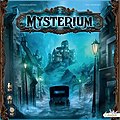
Mysterium is a cooperative deduction game for 2 to 7 players designed by Oleksandr Nevskiy and Oleg Sidorenko. One player takes the role of a ghost communicating clues through surreal illustrated vision cards; the other players are psychic investigators trying to identify the ghost's murderer, location, and murder weapon. The ghost cannot speak -- all communication is through the dreamlike imagery on vision cards.
Mysterium draws frequent comparisons to Codenames and Dixit. Like Dixit, the vision cards are beautifully illustrated and deliberately open to interpretation, creating rich discussion among investigators. Games take 45 to 75 minutes. Excellent for groups who enjoy narrative, cooperative play, and creative lateral thinking.
2 Components
- 84 vision cards (the ghost's communication tools)
- 6 suspect, location, and weapon boards (each with 6 illustrated cards)
- 36 character cards, 36 location cards, 36 object cards
- Ghost screen (hides ghost's information)
- 7 psychic tokens
- Clock board (tracks turns/time remaining)
- Crow tokens (indicate clairvoyancy track)
- Progress boards
3 Setup
- One player volunteers to be the ghost. The ghost sits behind the screen.
- Place 6 suspect, 6 location, and 6 weapon cards in the play area -- one set for each investigator (minus the ghost).
- The ghost secretly assigns each investigator a specific suspect, location, and weapon combination from behind the screen.
- The ghost shuffles the 84 vision cards and draws 7 to start.
- Set the clock to 7 (investigators have 7 rounds to solve all mysteries).
4 Gameplay
Play proceeds in rounds (up to 7). Each round:
- Ghost deals visions: The ghost gives each investigator who has not yet solved their suspect, location, or weapon one or more vision cards. These cards are the only clue to what the ghost is communicating.
- Investigators discuss and guess: Investigators discuss the imagery openly (the ghost listens but cannot speak, nod, or gesture). Each investigator places their token on the card they believe matches their assigned element.
- Reveal: The ghost reveals whether each guess is correct. Correct guesses advance the investigator to the next element (suspect to location, location to weapon). Incorrect guesses: that investigator tries again next round with new vision cards.
- Clairvoyancy: Investigators who have already solved their mystery can vote on whether other investigators' guesses are correct (using clairvoyancy tokens). Accurate votes improve your clairvoyancy ranking, which affects the final vote.
- Clock advances: Move the clock forward one space.
5 Interpreting Vision Cards
The vision cards are the heart of Mysterium. Each features surreal, dreamlike illustration -- a hot air balloon over a frozen sea, a Victorian mansion half-submerged in sand, a fox wearing a top hat in an impossible landscape.
The ghost communicates by selecting vision cards that relate to their assigned clue through any kind of connection: color, mood, subject matter, symbolic association, texture, setting, time period, or emotion. There are no rules about how cards must relate -- any association is valid.
Common interpretive lenses investigators use:
- Color: A red card for a red-dressed suspect; blue-grey for an underwater location
- Objects: A card with a candle for the candelabra weapon card
- Mood: A menacing, dark card for a sinister-looking character
- Setting: A card with Victorian architecture for a manor location
- Symbolic: A card with clocks for a time-related suspect name
6 The Final Vote
If all investigators solve all three elements (suspect, location, weapon) before the clock runs out, a final vote occurs:
- The ghost selects 3 vision cards corresponding to one specific complete suspect/location/weapon combination -- the actual murderer.
- All investigators secretly vote on which of the solved combinations they believe is the true murderer.
- Investigators with higher clairvoyancy rankings see more of the final vision cards before voting (the clairvoyancy track determines how many of the 3 cards are revealed before voting).
- A majority vote for the correct combination wins the game.
7 Winning and Losing
Win: All investigators solve their elements AND the majority votes correctly in the final vote.
Loss conditions:
- Clock reaches zero before all investigators solve their elements
- Investigators solve all elements but vote incorrectly in the final vote
8 Strategy Guide
Ghost: Give Multiple Cards When Stuck
You can give up to as many vision cards as you want (you have 7 in hand, draw more as you use them). If one card isn't landing, give 2 or 3 cards that approach the clue from different angles. More data helps investigators triangulate.
Investigators: Narrate Your Reasoning
Say your reasoning out loud, even if it sounds absurd. "This card has a broken clock and the suspect's name is 'Timmons' -- could it be the clock connection?" The ghost cannot respond, but your reasoning may help other investigators, and you'll often talk yourself to the right answer.
Ghost: Prioritize Direct Visual Connections
Abstract symbolic connections often fail. If the suspect has a red dress, send a card dominated by red. If the location is a greenhouse, send a card with lush green plants. Simple, direct visual matches outperform clever metaphorical ones -- especially early in the game before investigators know your communication style.
Clairvoyancy Is Not Optional
Investigators who have solved their mystery should actively vote on others' guesses. High clairvoyancy ranking unlocks more final vision cards, giving the group more information for the final vote. Low group clairvoyancy often costs the win even when everyone solves their elements.
9 FAQ
🎲 House Rules
Play Mysterium your way?
Save your house rules and share a link or QR code — friends can pull them up at the table.